“#tdc2706 #ds106 “Welcome aboard, do what you like and leave the rest.” The Word according to @jimgroom

“#tdc2706 #ds106 “Welcome aboard, do what you like and leave the rest.” The Word according to @jimgroom
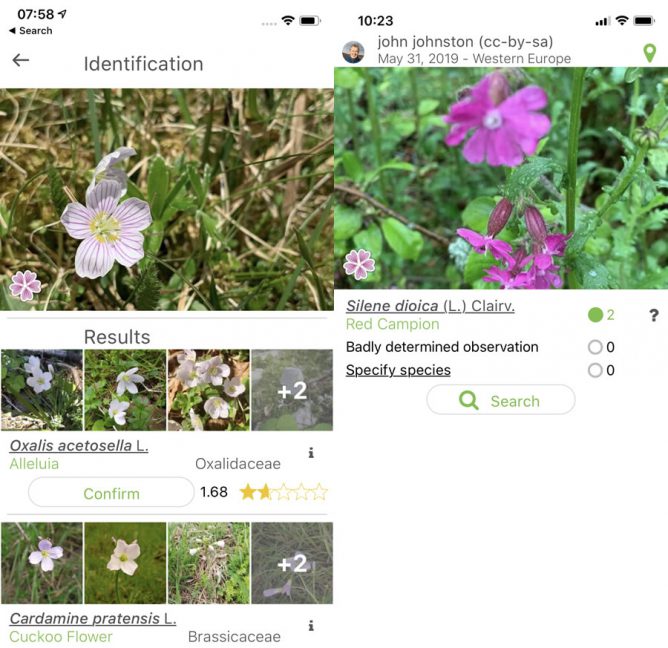
Pl@ntNet is the world’s best social network is an interesting article and leads to a useful looking app.
Pl@ntNet is a plant identifier that combines algorithmic and social tools to identify plants.
An algorithm matches the digital image against a massive plant database and presents its best guesses as to what type of plant it is. The user who submitted the original image picks from a list of the most likely candidates, and ranks the probability the image is a match on a five-star scale. The community then vets each image, validating the identification or suggesting a new one.
The post has lots of interesting angles on the possible future of social networks, the indieweb and a nice personal touch. Highly recommended.
Last week I crowd sourced a flower identification, I ran the same image through Pl@ntNet this morning and had confirmation of the conclusion ‘we’ had reached1.
I made a couple more tests on the app and it seems to work really well. My one problem was that submitting photos uses the location you are at at the time of submission, not where I took the image (as far as I can see). Often I want to take a picture and bring it home to identify. I don’t want to give the impression that a Scottish hill flower is at home in Glasgow city! I can of course just id flowers without uploading them but the organisation wants people to add to the collection in the name of citizen science.
I’d recommend the app itself too, it seems to work very well, could be useful for outdoor learning and Pl@ntNet’s practices and principles sound great: open and thoughtful.
I wonder if we should spend some time explaining to pupils why we choose the tools we use, the affordances of said tools and the drawbacks. In the case of “free” tools why companies give them away. I don’t believe we think about these reasons in enough depth.
A test of snapthread which has been updated to version 2. When I tried the 1.8.1 version I rather liked it. It was then an app to stitch live photos into wee videos on iOS. Version 2 adds a lot more features. I still like it.
This video should not be used to judge the quality of the output, I used CloudConvert to squash the 38MB 1440 × 1080 mp4 down to 4.5MB 1.
My class used the free version, limited to 30 seconds of video, last session a bit, we had a few crashes, but I think it is a promising app. Ease of use, limited time of the free version and lack of stickers, for now 2, are useful for the classroom. My class use iMovie and Clips too, but sometimes we might not want the greater complexity of iMovie or the wacky possibilities of clips.
Unfortunately CloudConvert doesn’t work for me on the school network, I’ve tried a few apps that convert and squash video but no really found a good one for pupils to use. I would like my pupils to be able to do that, to save space on their blogs and to speed up uploading. I am not sure on the official line on posting to silos in North Lanarkshire. Social media, especially twitter, is very popular. That is staff rather than pupil posting, I’d like my pupils to be involved in the uploading of video to their e-Portfolios and the class blog without my interference.
For Glow Blogs, I’d also like the app to change the file type to mp4 or m4v as .MOV files, that are apples favourite, don’t play nicely with all browsers. We made a change to standard WordPress functionality to accept .MOV files as video, but some browsers don’t play them. Strangely, just editing the file extension, from .MOV to .m4v works, at least for Chrome. I can’t find a way to change extensions on iOS but I’ve tested on the desktop.
FWIIW Snapthread’s videos are .MP4 when exported to the camera roll, so only need squashed for my needs.
Private school woe over rise of state pupils at Oxbridge | News | The Times
The recruitment by Oxford and Cambridge of more state pupils has led to private-school parents claiming that their children are being edged out by “social engineering”, a leading head teacher has said.
My jaw dropped when I saw the front page of The Times in the paper shop this morning. Unfortunately, or fortunately, I can’t read the whole thing online as it is behind a pay wall.
It is the social engineering bit that got me. A whole class paying for their children to be schooled differently 1 may not fit the exact description of social engineering but it an huge effort of that class to shape society and keep itself on top.
I’ve watched this with my class several times now and a few more myself as prep. It is a lovely animation and a really good film to discuss the elements of film. Especially sound and music. Crows and a Raven, what is not to like! I’d highly recommend it if you are looking for a short, 5 minute, film to watch in upper primary during literacy lessons.
Following from this conversation
Tom Woodward whipped up a plugin to clone posts on a WordPress Multi-site blog to one of your own.
I think this could be a really useful way of giving pupils a template for e-Portfolio post. I’d be very interested in exploring getting this into Glow Blogs. I’ve been asked about this sort of functionality a few times.
As I see it, the best things schools can do for kids is to help them learn how to distinguish useful talk from bullshit. I think almost all serious people understand that about 90% of all that goes on in school is practically useless, so what I am saying would not require the displacement of anything that is especially worthwhile.
Found in this tweet by @MarkRPriestley.
My link is to a pdf of the talk from 1969. Now seem broken so archive.org
Postman also wrote kairosschool.co.za/wp-content/uploads/2011/02/Teaching-as-a-Subversive-Activity.pdf.
A good fun read with many cringe points, which of the forms of BS have you used? I’ve used a lot.
 Aaron Davis (Read Write Collect)
Jeffery Zeldman argues that in being unable to pay mortgage associated with the web, we have become indebted to the mob that is platform capitalism. This has led us into the money trap, which demands unrealistic rewards that care more about clicks than community. Zeldman’s suggestion on how to fix...
Aaron points to Nothing Fails Like Success (A List Apart).
Aaron links to several fellow travellers reactions that make great reading too.
Aaron’s own blogging has gone a long way along the IndieWeb path and is a excellent one to follow.
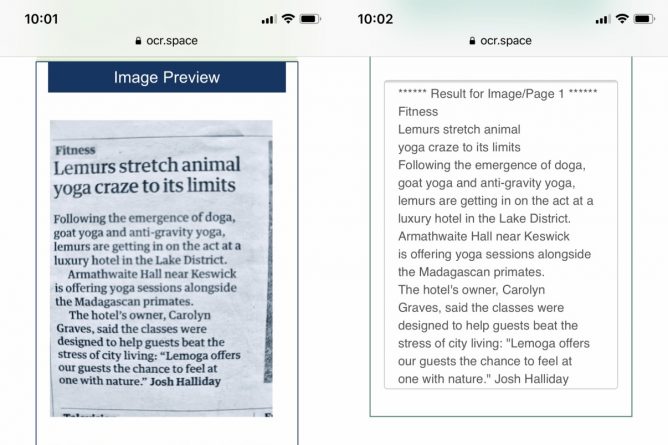
I’ve found Office Lens useful over the last few year in class. It is a good way to get some text into a document for editing. The workflow for me is a wee bit clunky, snap on phone, open app, upload. Then either open in word or switch to desktop and open from OneDrive there when it syncs.
Today I found OCR.space a free online service. I gave it a quick try on my phone.
The first attempt failed, I had to edit the photo to B&W and brighten it a little (as per screenshots above), but the results were impressively quick. There was no swapping back and forward between apps.
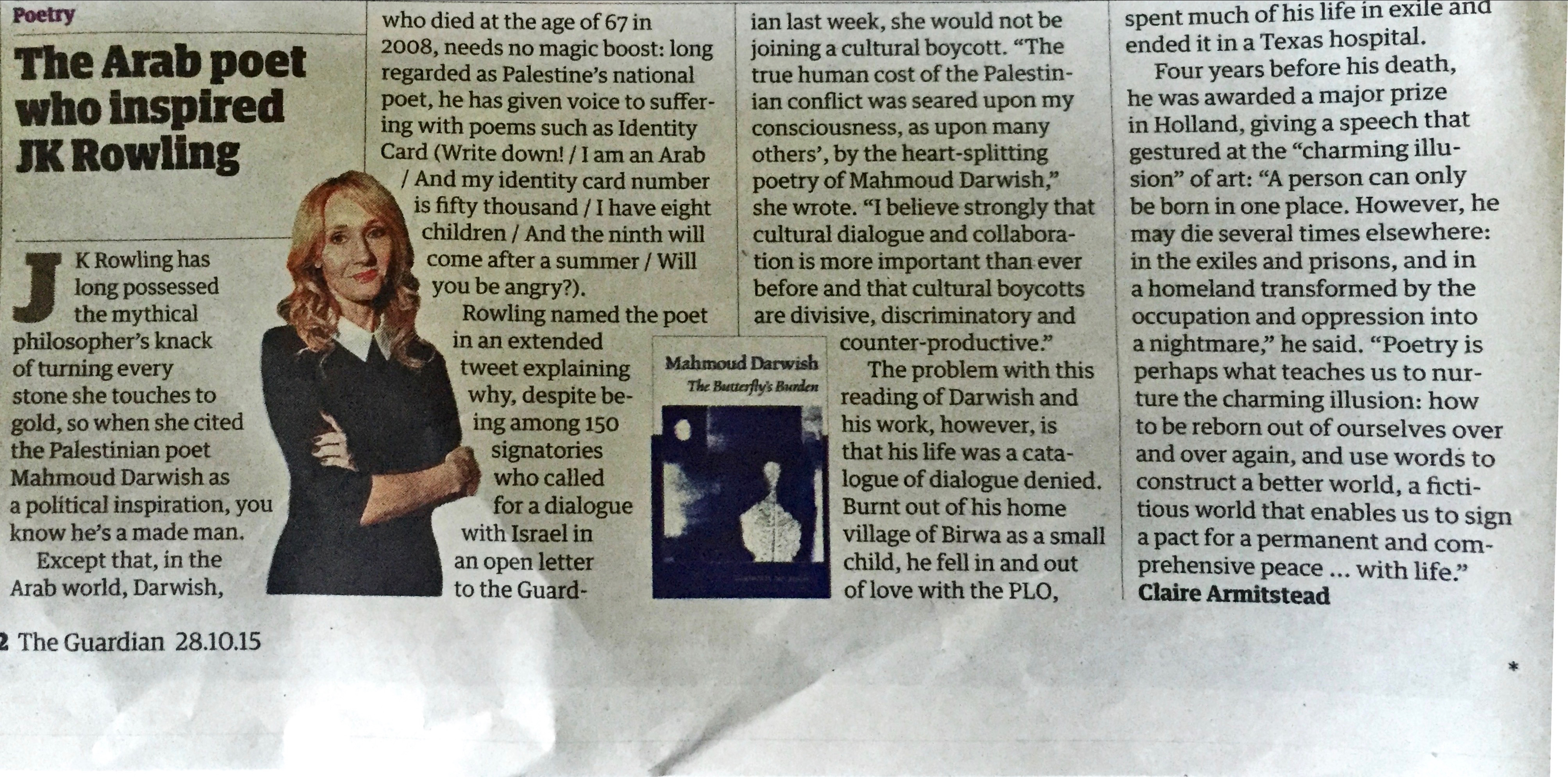
I’ve tried a multi-column image too using the same image I used back in 2015 with office lens. The results are just as good and fit my preference for text I can copy as opposed to a document I need to open.
Here is the docx Office Lens converted, and here is the OCR.space one, from This image, I had to shrink it a bit to get under 5mb for ocr.space, I don’t think Id need to do that iif I was going straight from the phone when the image would be a smaller png.
I hope to give ocr.space a test in the real world next term.
I’ve also found dictation on my phone a great way to get documents into text. Reading someone elses words seems to work better for me that thinking up my own as I go.
I found ocr.space via OCR Shortcut : shortcuts on reddit, butI’ve not tried the shortcut, the webpages seems quick enough.