Read Outdoor learning has improved our pupils' attainment by Jay Helbert
Children here at early level experience 50 per cent of learning and play outdoors, those at first level have 33 per cent and second level children have a quarter of their school time outdoors. This has enabled the school to use a mixture of formal and informal learning outdoors to build in play-based and pupil-led learning, which, in turn, has helped to reduce anxiety and build resilience.

Really positive article in TES by Jay Helbert💙 (@learningjay) .

Our Forest School (in the grounds of Argyll Estate) and Beach School (on the shore of Loch Fyne) provide opportunities for a blended experience. These lessons take place weekly over the course of a school term and are child-centred experiences where teachers set up learning “provocations” and options for activities ranging from den-building and mapping to creating artwork and storytelling.

I’ve done a bit of outdoor learning in school but nowhere near the 25% the second level classes are managing here. I was interested to see this maths idea:

where children survey plant and animal species to gather data

I sometimes struggle to think up second level ideas for literacy & numeracy. I’ve mostly found early and first level ideas online.

The outdoors a great stimulus for writing, reports, narrative and poetry. Talking and listening seem built in. In maths we have done a fair bit of shape & measure and I can see the potential for data and related activities. It would be good to see a bank of ideas. 25% is more than once a week.

Bonus thought, has TES Scotland become a sort of medium for educational blogging. I am reading a lot of good stuff on TES.

Reposted a tweet by Banton Primary (Twitter)

The First Lego League https://dlvr.it/S20DWL pic.twitter.com/VtRSZawpGb

My class had a team in the South of Scotland heats of the First Lego League challenge on Thursday, very proud

#FIRSTLEGOLeague #FLL #RePLAY

Replied to One Simple Practice I Will Continue Post-Pandemic. (THE TEMPERED RADICAL)
Like many teachers who have spent the past year teaching virtually, I have had to get used to one sad reality: My eighth grade students rarely turn their cameras on — and very few are willing…

Hi Bill,
This is really interesting. I teach younger kids, primary 6-7 age 9-12 but I saw a gradual spread of turned of camera and lack of audio from my class over our second lockdown at the start of the year. As I was using teams, I used the text chat and got a lot more responses and considered ones using that.
Interestingly some of my class were in school, essential workers kids, there were a lot more vocal I presume because they were sitting in a room together and gained confidence from that.
I do occasionally use online responses in class and I’ll be thinking of easy ways to incorporate that in the future.

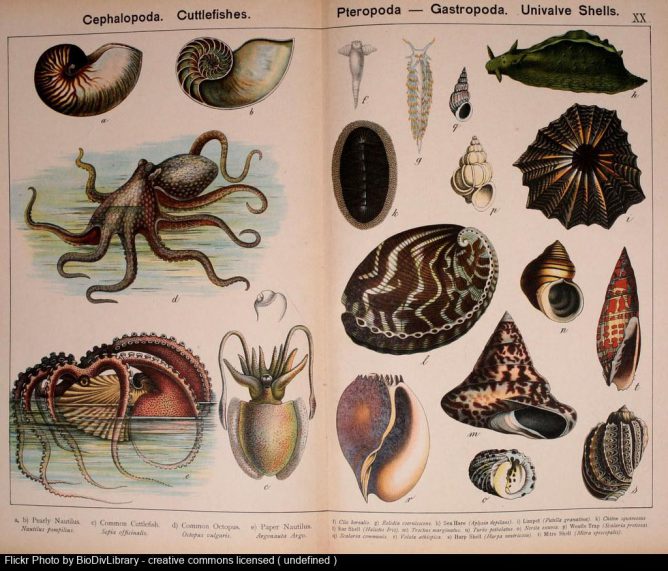
Somewhere or other1 I Saw a link to v.2 (1799) – The Naturalist’s Pocket Magazine or compleat cabinet of the curiosities and beauties of nature. Intriguing enough which lead me to discover the Biodiversity Heritage Library:

The Biodiversity Heritage Library (BHL) is the world’s largest open access digital library for biodiversity literature and archives. BHL is revolutionizing global research by providing free, worldwide access to knowledge about life on Earth.

About BHL – Information about the Biodiversity Heritage Library

There seems to be a vast collection of biological books that are free to read and download. There is also a twitter account, @BioDivLibrar and an amazing Flickr account: Biodiversity Heritage Library where there are over a quarter of a million images, many public domain. They have also contributed

over 2 million BHL images have been uploaded to the IA Book Images Flickr stream as part of the Art of Life project. These images are identified and uploaded in bulk using an algorithm. They offer a great opportunity for serendipitous discovery via browsing.

from: About Biodiversity Heritage Library | Flickr.

The Library are asking for people to help tag their flickr images and this might be a good activity for secondary pupils?

Bird Bingo


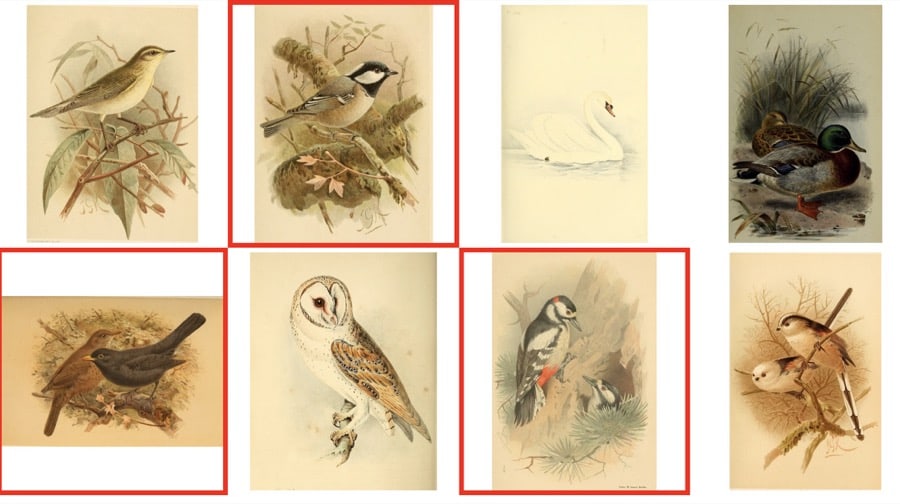
As a primary teacher, once I’d stopped just raking through some beautiful images I knocked up a quick Bird Bingo game for my class to help with bird identification. It has random cards and a caller.

There is page after page of beautiful pictures in the photo stream I defy anyone to leave it quickly. Example page 2094!

Featured Image: n456_w1150 | Natural history of the animal kingdom for the u… | Flickr public domain.

1. I don’t like not being able to attribute where I found this amazing resource.
Replied to a tweet by Blair Minchin (Twitter)

Really grateful for the opportunity to contribute to @tes

“I’ve observed many benefits of using speech-to-text technology but there is one discernible outcome in the classroom that I’ve seen more than any other: smiles” 😃 https://twitter.com/tes/status/1378695104525910017

Notes & Airdrop are great pieces of tech in class. I particularly like the lack of features in notes allows pupils to concentrate on writing. I encourage pupils to start in notes even if writing that will end up in more complicated app.

Museo is a visual search engine that connects you with the Art Institute of Chicago, the Rijksmuseum, the Minneapolis Institute of Art and the New York Public Library Digital Collection Every image you find here is in the public domain and completely free to use, although crediting the source institution is recommended!

from: Museo

This looks like another pupil friendly source of images. I’ve added this to the short set on my classes’ links page.

Reposted a tweet by Banton Primary (Twitter)

Episode 4 of the Banton Biggies Podcast is out now. Scripted & recorded by pupils in their home and edited together by the children in school all in less than a week.https://blogs.glowscotland.org.uk/nl/bbpod/2021/03/09/bbp-episode-4/

I’d avoided doing this earlier in lockdown ’cause I though it might be tricky. Turned out easier to organise than if I was in class. Even minimal supervision of the edit in school today.

Windscape is an exciting children’s adventure that explores the dilemma between the usefulness of wind farms and the beautiful scenery they can sometimes destroy.

Paul Murdoch, the author of Windscape has recorded the audio for each chapter, created learning material and made them available for free.

With Paul’s permission I’ve taken the resources and turned it into a Glow Blog.

Windscape – an exciting children’s adventure by Paul Murdoch

and a podcast to which you can subscribe on: apple or android.

I have already started using the resource with my class and am looking forward to continuing.

As the audio is a blog it is easy to change things, we are open to adding to the learning resources if anyone has ideas. You can get in touch through the site.