Sfl 09folk

I am starting to filter through various thoughts about the two days at the learning festival and of course TeachMeet09, yesterday I posted my unused, TeachMeet09 presentation (not a presentation, just talking and webpages) and I’ll have to post about our successful SLFtalk project in more detail later.

I found listening to all of the audio posted over the two days (27 in all i think) that got me thinking about how I had spent my time at SLF, firstly I had obviously missed a lot both on the trade show and seminars.

In fact I missed a few seminars that I had booked due to the printout supplied by the festival lacking days, the events I had booked were listed and times given but no days.

The following is probably a bit mixed up as to times and even days, in the SECC one hour looks like another.

Wednesday

My iPhone powered Posterous go off to a good start even before I got into the SEECC as I met Miss SLF herself, Tess just outside, Tess dressed the part and we grabbed a coffee and started bumping into folk until the doors opened. This met and chat formed a major part of my festival and quickly filled up my head with lots of ideas. On previous occasions I’ve live blogged a few seminars, I gave that up as my typing and thinking are not fast enough, this time I did not even take notes, but I think it might be a plan not only to take notes in seminars but at coffee time too.

Glowing Lounge

When the doors opened I went to the glow lounge, where I was introduced to Fraser Davidson an RM glow support guy. Although he was busy Fraser had time to swap ideas about using glow with me and we have been tweeting back and forth since. I am pretty excited about some of the functionality that Fraser has been adding to glow and will keep my eye on the Glow Scotland blog for news.

Fiona Hyslop Keynote

Next I went to the Fiona Hyslop – Cabinet Secretary for Education and Lifelong Learning keynote, this didn’t trigger any alarms, except perhaps when she mentioned several times that teachers would need to stretch themselves, not sure how many teachers have any more to stretch! The political aspects of the keynote mostly went over my head, luckily Bob Hill filled me later in when I asked, I hope he will blog about this soon.
Davidnoblepres 09

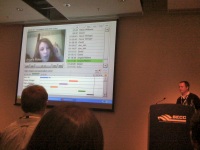
David Noble Using Glow Meet to connect learning professionals

After that I headed for David Noble’s seminar Using Glow Meet to connect learning professionals – lessons from the Access Network where David talked about his work in networking groups of professional online. He used his Access Network as an example and explained how he is starting to use Glow and GlowMeet to work with Chartered Teachers. David has an amazing amount of experience in this and filled in a lot of detail of how to make this work in reality rather than theory.

In the audience I met Joe Dale for the first time (in the flesh) the first of quite a few English educationalists who had made the journey north.

After David’s seminar he Joe and I headed down to the floor and buttonholed folk as we went asking them to post to SLFtalk I am not too sure how this went down, but we did pick up a few promises that came good.
Stevedoug

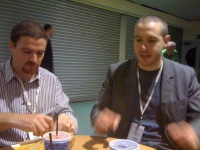
At some point we bumped into Doug Belshaw and Steve Beard and went for fish and chips. The usual banter and info swap took place.

Steve later showed me some of the way he is using sharepoint to provide a learning platform for pupils. The interface was, imo, better than Glow which is also based on sharepoint, I pointed Steve at LTS’s Andrew Brown and crossed my fingers.

The rest of the afternoon was a bit of a blur, I met with my north Lan colleagues, watch Ann present on 2DIY and the Smartboard on Smart’s stand. I’ve seen the smartboard in a new light since moving to North Lan, mostly due to watching Ann present, my previous use was mostly as a big mouse and scratch pad for brainstorming by pupils, Ann seems to know the notebook software inside out.

CPD Lounge
Bigtweets cpd Lounge

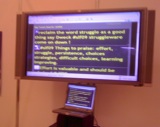
At some point(s) I visited the cpd lounge, when I enjoyed the Scotland on Screen presentation and persuaded David Griffiths to record a segment about the project for SLFtalk: Scotland on screen. The CPD Lounge seem to be acting as a meeting place for lot of people, I finally got to exchange more than a tweet with Mike Coulter, Mike is a fire hose of great ideas and has given a great deal of support and informal advice about SLFtalk. We had an interesting chat about aggregating and filtering information. I also fixed the cpdLounge video camera and was delighted to see that they were using big tweets.

I met up with David Muir and went with him across the Clyde to:

TeachMeet SLF09

Bob Camel John

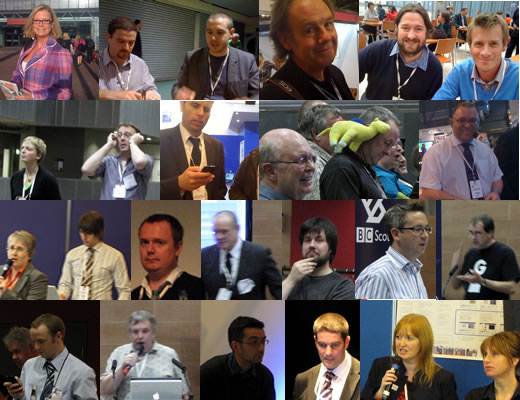
TeachMeet too place over the river at the BBC building. As usual an amazing set of people were there, including a big English contingent. Although I was disappointed not to get drawn for a presentation this was offset by the people who were. All were really interesting and it is hard to pick the favourites. I guess the ones that made the most impression on me were the ones that were about the effect on pupils:

Technology took a step back in Tess Watson‘s presentation on STEP as well she had a cloth’s line of pictures instead of a slide deck. Neil Winton was on passionate form and you can follow his slides on Slideshare, Neil was gently cameled as this year was a first visit to Scotland by the TeachMeet Camel.

A feature of this TeachMeet were the Learning conversations at the break, I’d guess most folk just had a chat but I joined in with Can Glow drive pedagogical change? lead by Bob Hill, along with John Connell. It is easy to get on a high horse talking about this stuff and I think I probably did, rather overstating some of the problems with Glow.

After that is was into a taxi and off to TeachEat for a lot more informative chat. I ended up in the pub next door with Ollie Bray who had lead a brilliant effort at organising teachMeet and Tom Barrett. Tom gave me my favourite image of the day, describing his classroom with Endless Ocean projected from a Wii beside a long wall display as ‘taking the game out of the console’. This natural mix of technology with pain and glue is essential in the primary classroom.

There is already a lot of content online tagged tmslf09 and there will be more.

Thursday

Some of Wednesdays reports my be a little out of chronological order and these ones certainly are.

Glowing Lounge
Ger Glowmeet

I visited the Glowing Lounge twice on Thursday to see 2 of my North Lanarkshire colleagues present, both have only been using glow since January but have made great progress.

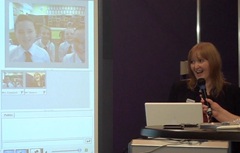
  • Geraldine Shearer talked about setting up her own school site, joining and participating in a National group, The very important bear, and setting up another National Group ‘The Unsinkable Ship’. Geraldine’s class joined in a glow group and the moment their smiles indicated that Geraldine appeared on screen spoke volumes.
  • Marjory Murphy talked about introducing glow to her class and using glow for Active Literacy; story writing and posting Formative Assessment comments.

Although I’ve seen some of this before it hammered home to me how glow is making a difference for teachers and classes that have not used online collaborative tools before. Glow may be an imperfect tool, but given the large amount of support given to teachers using it compare to other online tools and the overall vision, it will hopefully change many games.

Smart Table
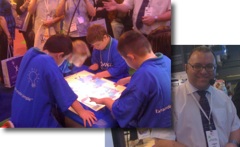
Smarttable ian

At some point in the day Tom and I ended up at the smart stand watching Iain Hallahan Presenting on the SMART Table, you can read more on Iain’s blog, but I was captivated by the attention and concentration his pupils gave the table.

It would be great if the festival could be run on a day where more classroom teachers could come along. Over the years I was luck enough to get along but for most class teachers this is not possible.

Dragon’s Den

Was another area where pupils got to perform and worth watching because of that. Showed what pupils can do, confidently presenting to a large group of adults in a competitive setting. The sort of thing that goes on regularly in a lot of schools across Scotland.

Derek & Ollie

I didn’t stay until the end of the Dragon’s Den as I wanted to catch the spotlight by Ollie and Derek. At that point Derek was still in the Dragon’s den. Being a regular reader of both of their blogs I didn’t expect too many surprises but it is nice to have beliefs reinforced. In the event both gave a pile of interesting information and some food for thought.

Ollie talked about opening youTube up in schools and suggested that we should risk assess in the same way as we would any other potential problematic activity. I have always explained of online activity to my classes as being similar to a school trip, explaining that pupils represent the school and I expect positive reactions from the public. Ollie extended this nicely, explaining that using youTube would not mean free searches for whatever caught the pupils fancy but the use of youTube for meaningful learning.

Among other things Derek gave a rundown on CANVAS Scotland’s first schools based virtual world for learning. I’ve been involved at the LA side of this project and have been impressed by the scale of the project. That is it is small scale and focused. Although Derek probably winces when he sees me in his inbox asking for updates I think this has real possibilities for the classroom and As Derek has explained could be duplicated for other projects. Canvas uses opensim to create a Secondlife like world, in this case dedicated to art. each LA in Scotland has its own virtual gallery wher pupils art will hang alongside video of the pupils talking about their art. Pupils will be able to meet and talk about their art work in this virtual world. Watch the video to get more of an idea of how this will work. CANVAS will be accessed through Glow.

One thing Derek said that I have trouble with. In talking about various 3d virtual worlds he said:

are they going to gravitate or grow into text based one dimensional interfaces, …. I don’t think that they will…

I am not so sure, I hope children (and adults) will be able to move between 3d and text, appreciate hand written poetry as well as 3d movies, be happy using text and video chat. I hope CANVAS could be a model for a similar project using pupil voice instead of pictures and video. I like the idea of Tom’s pupils moving between Wii and wall display the two connected together.

I recorded parts of Derek and Ollie’s presentations for SLFtalk and you can listen there: Derek Robertson on CANVAS and Ollie on youTube.

Last minute on the floor

After the spotlight I went back to the floor to visit a couple of stalls I had meant to go to i-board make open-ended tools, games and activities for interactive whiteboard, like many other stands, but came at the recommendation of Marlyn who is working on matching the activities to CfE, at the moment they are offering 6 months, full access to all materials for free. I’ve not had time to explore much but trust Marlyn’s judgement.

I also dashed round to 2Simple Software to speak to Alan about the launch of 2Simple Online. I really like the 2simple products, and especially wish 2DIY was available for macs. At the moment 2Simple are giving all Scottish Schools one years free access to 2PublishExtra which will be accessed through Glow. This is another example of how glow is becoming more interesting as a portal rather than a tool.

SLFtalk

During all of this activity I was keeping half an eye on SLFtalk asking folk to contribute and moderating their contributions.

It is important, to me at least, that this moderation was just to avoid spam rather than to filter content.

I am delighted with the range of contributors and contributions to SLFtalk and will be blogging more about this later. Enough to say it has restored my faith in podcasting, openness and the human voice! I also hope to produce a compilation podcast of all the contributions ‘Now That is what I call SLFtalk‘ very soon.

Highlights

The above is a bit rambling, so here are my highlights:

  • Meeting folk, too many to mention, some for the first time in the flesh. As usual all were interesting, some as expected and some surprising.
  • Glow, how it is being used, and the tools that are becoming available through it. (I didn’t think I’d be saying that.)
  • Pupils, Geraldine’s pupils smiles, Iain’s concentration, the Dragon’s den presentations. I wish I had asked Neil’s a sensible question or two.
  • SLFtalk, lots to think about there. more later.

I also regret lost opportunities, for conversation, seminars and even some stalls, hopefully next year will be even better.

And

This was going to be my TeachMeet talk at the Scottish Learning festival this year, if my name had been pulled out of the virtual fruit machine.

kludge: (a badly assembled collection of parts hastily assembled to serve some particular purpose (often used to refer to computing systems or software that has been badly put together)) wordnetweb.princeton.edu/perl/webwn

The kludge refers in this case to my, fairly clunky, attempts to change some things about glow’s interface.

I’ve had a love/hate relationship with glow since I first saw it; I love the concept (What is Glow?) and hate some of the GUI and user experience. Since watching and being a little involved in glow training I hate some of the difficulties folk have doing simple things but I love seeing the inspiring work teachers and pupils have done in very a short space of time. (I saw great presentations from Marjory Murphy and Geraldine Shearer, both from North Lanarkshire, in the glowing lounge .)

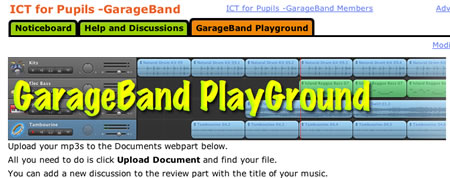
Last week I was working with a primary 6 class using GarageBand to create some simple music, the idea was then to upload the pupil files to a glow group into a document library and discuss the music in a discussion forum below.

The group is a local Authority one, and the hope is that eventually pupils may comment and assess work from other classrooms and schools.

Glowdocs

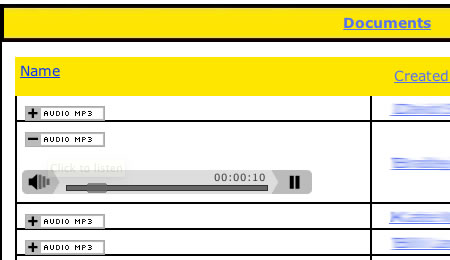
Unfortunately when the children started trying to listen to each others music, the files downloaded and opened in itunes, rather that just played in the browser. This lead to a little confusion and made it hard to move from listening, back to the browser and into a discussion.

I had been using an xml webpart at the top of the page, to make the glow page a little prettier:

Garagebandglowtop

So I started copying the links to the mp3 files and using dewplayer to provide a flash player. It quickly became apparent that this was going to make the page very big and the players would be separated from the discussion by the document library. It would create a lot of work for me and would not be easily for most teachers to duplicate. I really wanted to automate the process and I’ve found one way to do that.

I’ve seen and used the Anarchy Media Player on many blogs. This is a JavaScript solution for turning links to media into media players:

Anarchy Media Player 2.5 for WordPress, WordPressMu and Standalone Javascript will play any simple href link to mp3, flv, Quicktime mov, mp4, m4v, m4a, m4b, 3gp as well as Windows wmv, avi and asf files, in the appropriate player on your web page.

I though I might give it a try. I need to upload a folder full of various files to a website outside glow, as I could not get Glow to accept a JavaScript file in a document library. Once I’d done that I needed to do some simple configuration and then added this fragment to the xml webpart:

The automagically turned the document library above into this:

Glowdocswithplayer

Each link to an mp3 file is changed into a flash player which plays that file.

Brief testing seems to show that this will work for .mov .flv video files too. There seems to be some browsers issues which I am testing. I’ve also tried a few experiments with the shadowbox-js media viewer and the jQuery JavaScript Library with some success, again a lot of browser testing to do. My Javascript knowledge is minimal to say the least but I had a couple of brief conversations in the glowing lounge at the Scottish Learning festival this week and was introduced to Fraser Davidson who works for RM supporting glow. He showed me some lovely stuff he has been doing with XSL to embed and beautify various feeds into glow. He also told me, if I picked it up correctly, that we could export and make available an xml webpart that already has the Javascript links and code to produce the sort of transformation of a document library I’ve been playing with. That would mean that folk would just need to add a webpart to their page to get the same sort of effect, no coding needed. I am hoping to get together with Fraser to find out more and swap ideas.

Later today I hope to attend the Glow Development Needs You! event at LTS and find out more about some alterations and enhancements of glow. It looks like there may be quiet a lot to look forward to in glow soon.


A while ago (2 years, time flies!) I blogged some GarageBand plans for making simple music in class. I used it a lot at Sandaig, resulting in the Sandaig jukebox.

I’ve been using the technique again in developing some glow ict groups in North Lanarkshire.

This has given me the chance to work with some pupils again and to improve my instructions. Yesterday I decided to try and screencast the procedure and the result is show above. The process let me work a bit more with ScreenFlow, which is a lovely screencast editor. I am still working on my presentation skills which results in a few odd pauses and repetitions, but I though the movie worth publishing.

It also gave me a opportunity to test our Apple Wiki Server to publish the screencast: Simple Music with GarageBand. The Apple Wiki server provides one of the easiest to use podcast publishers I have seen, although configuring and theming the wikis and blog is a bit tricky. I was lucky to have one of the North Lanarkshire network guys set up the server and get me started. I am looking forward to finding a school or two who would be interested in some podcasting.

Some of the experience in themeing the wiki helped me in setting up some glow groups, I found some interesting ways to get glow to do what I want and hope to get the chance to talk about this for 7 minutes at TeachmeetSLF09 on Glow Hacking on Wednesday night.

The Sandaig blogs have been running since 2004, it is now time to move to a newer system for the school’s blogging. We have installed wordpress and are going to use that for most of the blogging at Sandaig from now on.

The new blog address is:

http://www.sandaigprimary.co.uk/otters

Where you will find the sort of posts you use to find on the old Sandaig otter’s blog, the poetry blog, Sandaig TV and all the other blogs. The only exceptions are the Head Teacher’s blog, which is staying right were it is: HT News and the Eco blog which will move to http://www.sandaigprimary.co.uk/eco.

If you link to the Sandaig blogs you may like to update your links. The older blogs will stay where they for reference but comments will be closed in the near future.

Slftalk 3

Two or three weeks ago I was having a skype chat to David Noble thinking about a podcasting project. We have not figured this out yet but we did come up with a short term podcast idea that should be fun and perhaps useful.

We started to think about simple ways to collaborate with audio files online and came up with the idea of an open Posterous blog where anyone could post audio reports from the Scottish Learning Festival. We though that folk could email audio to the posterous blog where it will sit in the moderation queue until we check it really is about the Scottish Learning Festival, then we send it on to the blog.

David had the idea of adding gabcast into the mix this would allow folk just to phone in their reports to a gabcast. After checking the Posterous API it looked like we could pick up the gabcast RSS feed and publish the audio to posterous too. A quick look at the Posterous development google group got me an example php script to use the api which I kludged together with the Magpie PHP RSS Parser to post the gabcasts to the posterous blog.

Posterous Small

At this point the only problem was that the gabcasts would be poster unmoderated to the blog. Moderation is not going to be stringent, but we felt we need to avoid spam. So I emailed one of the posterous co-founders Sachin who in a couple of days had added a needs_moderation flag to the Posterous Posting API.

This is not the first time I have had help from the posterous team, but it still amazes me that they take some much care of individual users as they continue to develop Posterous at a frightening rate. Just today they also added the New feature for sites that allow public submissions: Bulk delete unapproved posts which I hope we will not need but could be handy.

So SLFtalk will bring together audio from anyone who wants to contribute at the Scottish Learning Festival. They can contribute by emailing audio to post@SLFtalk.posterous.com or phoning the gabcast number for the price of a local call, the gabcast number is 02033182690, the channel is 30938, detailed instructions will be published soon and the password made available at the festival. More details of how to contribute are on SLFtalk and will be expanded.

twitterbird128

Ten days ago we published the
Introduction to SLFtalk on SLFtalk but did not announce it, I think I sent the url to one other person who got wind of it on twitter. In the 10 days it got 19 views. Last night I tweeted an announcement. 14 minutes later we had 138 views. 10 hours later we had over 400.

If the enthusiasm of the Scottish Education twitter community is an indicator I think SLFtalk might make interesting listening during and after the Scottish Learning festival.

If you are interesting in contribution audio, please read SLFtalk and follow @SLFtalk on Twitter to find out more. Hopefully the process will be simple enough for anyone to join in and maybe a way for some to dip their toes in the social media pond for the first time.

Twitter image Mirjami Manninen from smashingmagazine

Wordpressicon

At Sandaig I used pivot as a weblog system. it is a system I like. This blog run on PivotX a complete rewrite of pivot. When I started the Sandaig blogs, I choose pivot mainly on the basis that it uses a flat-file rather than a database for storage (pivotx can use either, I use a database here now as it seems faster) and you could have many subweblogs (we had over 20) running of the one install. Pivot is also an easy system to customise if you know a little html, so I could fit it in with the rest of the site easily (for example the HT News fits in with the rest of the site). Over the years the blogging system grew quite big and complex. We did try a wpmu install for a year, but didn’t use it enough to keep it going. I have been very happy with pivot except for a couple of times the config file has be corrupted and allowed a flood of spam in that required manual deletion. I had another one of these a few weeks ago and spent a Saturday morning deleting spam:(

So I though it was probably time for a change in setup. I could have upgraded all of the Blogs to the new version of pivot, but changing 20 odd themes and setting did not appeal especially as the school will not keep up the same amount of blogging. I decided to move to wordpress as that should be easier to maintain even if I am not involved. I like the fact that you can upgrade wordpress from the admin area of the blog. I also decided to sort of merge the functionality of most of the blogs into one. The excepting being the HT blog which will still be pivot and the eco blog which has been moved to a separate wordpress install. The eco blog only had a few posts so I though it would be simple to import them from pivot, via wordpress’ RSS import.

So I did a couple of wordpress installs and uploaded a couple of themes and messed about a bit. This all was fairly straightforward, I’ve installed wordpress a few times (amd wpmu too) so didn’t hit any major snags.

Importing from RSS gave me more of a headache, when I went to the import screen and choose RSS (or any other format) I got a blank page. I quick google show this has happened elsewhere but I didn’t see a solution i could use. I did a test on a test wordpress blog on this domain and could see the importer page there. So i made another install of wordpress here and imported the eco blogs rss. I then used phpMyAdmin to export the database from the mySQL database. using phpMyAdmin on the Sandaig site I dropped the relevant bits and imported the exported database. It went quite well, there are sill a few things to tidy up and i needed to change some of the urls in the database (as it kept redirecting my logon to this domain.) but all seems well now. I’ve created various class accounts and mailed instruction for use to Sandaig. hopefully they will get their heads round it soon. I believe there is an interesting International project in the works and hope to see that online.

I also hope that the blogs continue to get support for all the folk who commented there over the years, this is a great encouragement to the pupils.

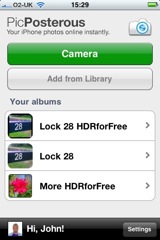
picPosterous is a photo and video publishing app for the iPhone.

Picposterous 0Picposterous 1

At first glance I could not see the advantage of using this rather than the iPhone’s mail application, and neither could TechCrunch but a tweet or two from Sachin, one of posterous’s founders both put me on the right track and gave further evidence that the posterous guys never sleep.

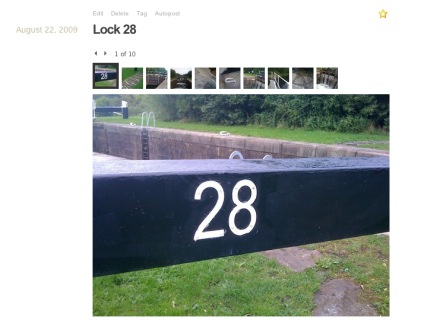
The idea of the applcation is that during an event (or day or meal or whatever) you take photos and post to posterous. The difference is that you can continue to add images to the post after the first image is posted. This will certainly make it a useful application. Instead of waiting until the end of an event you can snap and post without crating a series of posts. picPosterous will also queue up the photos and post then when it can. You can quit the app and it will try to post again the next time you open it.

Lock28posterousscreen

So the app is a lot more useful than I first thought. A couple of drawbacks/limitations: the only text you can post is the title and the media is limited to pictures and video (on a newer phone than mine). The auto post feature, which I have turned on for twitter, flickr and a test blog only posts the first photo, which makes sense for twitter but if I used posterous as a means of posting to flickr I’d probably want the whole album being added.

All in all a handy addition to ways of posting stuff online if not a whole solution I think I’ll be using picPosterous regularly.

I also imagine that if the development of posterous itself is any indication the application will be upgraded and improved regularly. Posterous itself has had an incredible rate of feature addition. The founders are very responsive to any suggestion for improvement making it the most exciting blogging platfrom out there.

Aside, I used Camera Genius for iPhone as a replacement for Night Camera for Anti-shake stabilization. night Camera didn’t make the upgrade to the 3.0 version of the iPhone software. Unfortunately Camera Genius doesn’t seem to take photos with location exif data so posterous does not get to produce a nice wee map.

Yest another mapping/iphone post. This might not seem like education but I consider the mapping of walks etc. a sort of trial for possible Teaching and learning activities. At Sandaig I was always interested in blogging trips (Sandaig Netherlands 2008 or Glencoe 06 for example). I am interested in trying to get pupils and groups to tell stories in different ways, audio, text, pictures and video adding location into the mix seems like a good idea. This week i was talking to some of the instructors at Kilbowie Residential Outdoor Centre Oban discussing some of the potential for adding some more ict into their mix through Glow.

On Friday I was going for a walk and decided to try a few different ways of recording the walk centred around the iPhone.

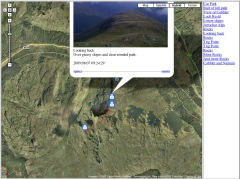
WalkMapBenDonich

As usual I recorded a gpx file and took some photos with the phone for A Mapped Walk

I also took other pictures with my camera and geotagged them once I got home with gpicsync suggested by Dan Stucke in a comment here. gpicsync is a visual front end to exiftool that I’ve mentioned before and works well, unfortunately my iPhone battery gave up early as I was using lots of apps, but a few were mapped by Flickr. The rest taken on the way bak down are untagged.

At the top of the hill i decided to try audioBoo. I love the way Audioboo combines a picture, the audio and a wee map and is simple to use. Unfortunately I didn’t have a good enough signal to post the boo from the hill.

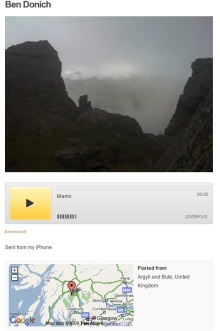
Posterousimgaudio

Instead I turned to posterous. The really good thing about posterous on the iphone is that because it used email you don’t need a signal, the mail app will just wait until it gets one and sends the mail. I found this out on my holiday this year when I seemed to get an occasional signal overnight, making posterous the easiest way to blog.
I’ve also found out how to combine images and audio in an email from the iPhone and because posterous now geo locates your post if there is a location in the exif data of any images posted you get the same effect as audioboo. See Ben Donich – John’s posterous.

The trick is, take a photo, switch to the camera roll and click the share/mail icon. choose the picture and copy it (This will work with several images). Then open up the Voice memos app, recods some audio and then mail it. You can paste the image(s) into your mail and send.

Lifecastingicon

The last thing I tried was the lifecasting app iTunes url, this allows you to choose some photos and then record a narration over a slideshow of the images. The result can be uploaded to youtube or downloaded to your desktop as a m4v file (the app like many others acts like a wee server and puts up a webpage with the movies to download.)

Lifecasting works fairly well, the fact you cannot mail the file is a pity. The other problem is that the slides are shown for a fixed length of time, the example below is the longest, so you have to fit your audio to the show. I did duplicate a couple of images to give myself longer to talk. If the slides could be set to last the length of the audio and you could use mail or the metaweblogAPI to upload them this would be a great app for mobile learning.

lifecasting Example

T“>

I’ve downloaded a couple of other slideshow apps to investigate (at the vast expense of 59 pence each and will try them out whenever I can find them and have a bit of time).

Them ore I use my iPhone the more I believe that a device of this sort has a real place in the classroom for creating the sort of thing I used to use digital cameras, videos, imovie, garage bands and a blog for; the types of activity listed by Margaret Vass in her recent post on Learning, Teaching and ICT » Digital Storytelling ….. and ePortfolios?. We might need to wait a wee while the the right combination of price and feature set but it is getting more interesting every week.

One of the interesting things about twitter is the speed that tweets flow past, always something different to look at and always something to miss. I quite often use the favourite tool in twitter, especially on my phone, to ‘bookmark’ tweets of interest. some of these are ones that just amuse me:

Examplefavs

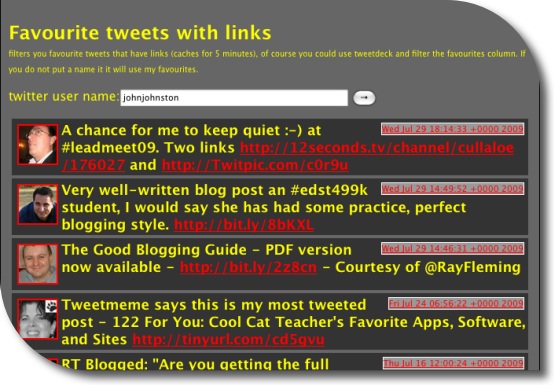
And some contain links I am interested in following up later. I sometimes use TweetDeck‘s filter to filter out links containing links. A while back I made a wee web page to do the same thing:

Favtweetlinks

Fav tweets with links

This joins one or two almost useful twitter toys I’ve made, as opposed to a few more useless ones.