The blog I’ve enjoyed reading most this summer has been Clarence Fisher’s.

I’m still a believer that my default classroom tech set up: classroom blog, discussion boards, individual blogs, wikis, google docs and hangouts, flickr, skype, and a few random pieces of production software (audacity, etc) does more to give kids a voice, to connect them with people on the other side of the globe who have new ideas for them to evaluate, than 90% of the VC dollars out there have done with the latest apps.

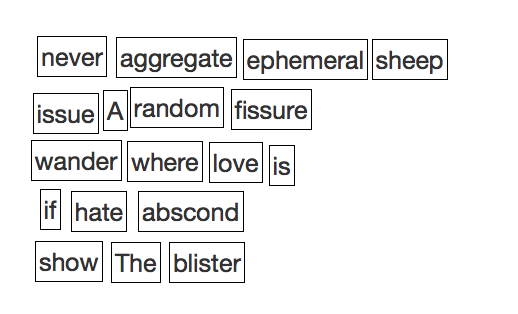
The First 100 Years of Web Design 1

Is just one quote but I think anyone interested in using ICT in learning and teaching would get a lot from reading over his recent posts.

A Challenging Tweet is a great way of looking at and thinking about tech in schools overall.

This fitted with Second Life college campuses: A tour of abandoned worlds which I found via Stephen Downes

Clarence’s choices of tech to use parallels my own although I never could use some of these in the class due to blockages. The thing that strikes me about these choices: blogs, wikis, communications in general, is that they need some sort of long term care. One blog post will not a lot for your class or a learner. A series where they connect with another school across the world just might. This make this harder than grabbing an iPad and using a drill and practise app (I know easy target).

I am saying care rather than planning because a lot of goodness my classes got from blogs was serendipitous it could not be planned for. This takes me to:

The same sort of blind process happened in another series of experiments where Stanley and Joel Lehman instructed robots to work toward defined objectives. In one experiment a bipedal robot programmed to walk farther and farther actually ended up walking less far than one that simply was programmed to do something novel again and again, Stanley writes. Falling on the ground and flailing your legs doesn’t look much like walking, but it’s a good way to learn to oscillate, and oscillation is the most effective motion for walking. If you lock your objectives strictly on walking, you won’t hit that oscillation stepping stone. Stanley calls this the “objective paradox” — as soon as you create an objective, you ruin your ability to reach it.

from Stop Trying To Be Creative | FiveThirtyEight

Which sort of relate to my conversation with Charlie Love yesterday evening on Radio EDUtalk 2, where he talked about following learning interest in teaching coding in a creative way.

Charlie’s post Minecraft: A celebration of learning at #Minecon2015 about Minecraft if my final piece of envy for this post.

 

1.
the linked post Web Design – The First 100 Years is great too.

2. Radio #EDUtalk 19-08-2015 Charlie Love

Featured Image giotto-envy on Flickr Public Domain.

I’m not on holiday at the moment but taking the odd day off over the summer. Yesterday was one. I found a good set of amusing links, here are a few.

The New Devil’s Dictionary From The Verge updates Ambrose Bierce’s The Devil’s Dictionary.

Examples:

blogger (n.): An invasive species with no natural predators.

GIF (n.): Many prefer to pronounce this word “GIF,” instead of the more controversial-sounding “GIF.”

music (n.): An art form whose medium is copyright law.

And so on.

This reminded me to google for an english translation of Flaubert’s Dictionary of Received Ideas, hoping as usual for a creative commons version that could be played with. As usual I didn’t find that but got In Place of Thought – The New Yorker by Teju Cole which adapts the idea for modern times:

COFFEE. Declare that it is intolerable at Starbucks. Buy it at Starbucks. EVOLUTION. Only a theory. FASCISM. Always preceded by “creeping.” FEMINISTS. Wonderful, in theory. FISH. A vegetable.

Ouch, that last one stung!

Bonus Twitter mashup

Checking Teju Cole (@tejucole) on Twitter as his ideas started as tweets, I found:

  1. He seems to have abandoned twitter and
  2. The Time of the Game, a synchronized global view of the World Cup final. Just the sort of thing I like on the web, except for the football element.

Pano from Beinn Bhreac

Here are a great series of articles that I came across this morning. I’d recommend everyone interested in the Internet and education to read them.

For someone who reads a lot online I do not dip into TES often. So I was excited to find:
Jim Knight: ‘Let’s give all students their own domain name – and watch the digital learning that follows’ today.

Ironically I got it via Jim Groom’s post:
Domains and the Cost of Innovation. I do read Jim’s blog religiously.

Jim Knight’s article is based on another wonderful post by Audrey Watters> Audrey writes about the work of Jim Groom and others at the University of Mary Washington: The Web We Need to Give Students.

I’ve been muttering and mumbling about this idea for a good while now, based on reading about the UMW project and taking part in DS106. I really hope that the TES article gives the idea some legs and it can get some traction in the UK and more importantly, to me, in Scotland.

Before I started working on the Glow team, I included it in a post, Glow should be at the trailing edge?. I don’t think the idea has ever been given serious consideration at the right level. It certainly goes is a slightly different direction than Glow is going but it is still worth considering.

sub_0010

One of the things I love about open education in general, and open educational resources in particular, is the creative potential they offer to find, use, reuse, create and recreate such a wealth of diverse content and resources.

Lorna Campbell: Creativity, serendipity and open content | Open World

The post has some lovely examples of sources of surprising  stuff, great rabbit hole links to dive into. Most of the sources could easily be used to inspire some digital creativity, storytelling or practise using media tools. Or just for a little silliness!


Tit-Bits – digitalvictorianist.com

it is seldom about technology designers’ a priori plans for a technology, and more about users’ unexpected practices with it. That, to me, is the most fascinating and useful basis of research inquiry.

via Brief statement on ‘Digital Wisdom’ | Ibrars space.

I love ‘unexpected practices’ it is why we need flexible technology in Learning and Teaching.

My favourite use for word when I was teaching primary 6 was as a poor man’s vector editor, Sandaig Otters » Seeing Stars, and I’ve often been surprised by how pupils and teachers bend unsuitable software to their needs.

About 20 years ago at an education conference one of the speakers said: “To be literate is to fully inhabit a culture”. At first it felt a little affected or a bit too “luvvie” for my liking. Over time however I have repented. I find it useful rather than struggling with new words like “learnacy”.

via Digital literacy | NET BLOG.

I really like this idea of literacy covering the whole of a culture. It seems to hint at avoiding any worrying about the word digital and accepting that it takes it place in a range of areas we can be literate in. We can escape the worry about being too luvvie by considering the range and Types_of_cultures.


I would say that it might be worth rethinking “comments” on student blogs altogether – or rather the expectation that they host them, moderate them, respond to them. See, if we give students the opportunity to “own their own domain,” to have their own websites, their own space on the Web, we really shouldn’t require them to let anyone that can create a user account into that space. It’s perfectly acceptable to say to someone who wants to comment on a blog post, “Respond on your own site. Link to me. But I am under no obligation to host your thoughts in my domain.”

from: Men (Still) Explain Technology to Me: Gender and Education Technology

There are a lot of interesting and powerful parts of this post by Audrey Watters but this interests me in all sorts of ways.
Thinking from the pov of a teacher working with primary pupils I’d want the ease of posting comments for pupils to continue, but if that could be done on their own space, with the option for some sort of universal trackback notifying the site commented on it would be really interesting. This of course links in to my reading around POSSE & the indieweb.
The whole post addresses much more important issues and I recommend it highly.

Some great reading on the train this morning. I’ve tended to swallow whole the idea of making being one of the best ways of learning. As usually with things that you hold dearly but perhaps without a lot of analysis it is nice to read some different opinions.

The bloggers here are thinking at a much deeper level that I venture, and I recommend following the links.

I started on Hapgood.

What would happen if we got over our love affair with creators? What would happen if we collapsed the distinction between maker and taker, consumer and producer, not by “moving people from consumption to production”, but by eliminating the distinction? What if we saw careful curation of material as better than unconsidered personal expression?
“Users” | Hapgood

Which linked to this:

You see critiquing isn’t a review where you let fly with your opinion, no the purpose of the critique is to make the work stronger, better, and more fitting.
Critique & Creation | Heart | Soul | Machine

Then:

Walk through a museum. Look around a city. Almost all the artifacts that we value as a society were made by or at the the order of men. But behind every one is an invisible infrastructure of labour—primarily caregiving, in its various aspects—that is mostly performed by women.
Metafoundry 15: Scribbled Leatherjackets

And:

A quote often attributed to Gloria Steinem says: “We’ve begun to raise daughters more like sons… but few have the courage to raise our sons more like our daughters.” Maker culture, with its goal to get everyone access to the traditionally male domain of making, has focused on the first. But its success means that it further devalues the traditionally female domain of caregiving, by continuing to enforce the idea that only making things is valuable. Rather, I want to see us recognize the work of the educators, those that analyze and characterize and critique, everyone who fixes things, all the other people who do valuable work with and for others—above all, the caregivers—whose work isn’t about something you can put in a box and sell.
Why I Am Not a Maker – Atlantic Mobile

Finally:

I’m always fascinated to see how my work in ed-tech is deemed “emotional” or dismissed as merely “cultural analysis” – gendered descriptions of what I do (subtly, overtly) perhaps.
Re-Building the Blog

I’ve not come to any conclusions here but it makes me think.

I got up this morning and didn’t make the bed, made some breakfast and just caught the earlier train. This let me make the walk from Waverley down to work rather than catch a bus.

Watching the scaffolders run scaffolding up a new building, helping complete the Architect’s vision, hoping to get to work in time for the barista to make me some coffee before the first meeting.

As I walked I am making this list; Wondering if a found poem is made, our national poet is called the Scots Makar; If I write a poem from the names of boats in a harbour am I a maker or curator; Artists, it seems to me, depend on other artists, critics, curators and caregivers for their making.

Finally I am thinking about DS106 Art on the couch my friend Mariana’s thoughts about learning thro critique.

scaffold2